Safety and facts
Emergency care, photos, witnesses, report number.
Crashes produce predictable injury patterns — and paperwork that outlasts the pain. This desk explains the mechanics-to-injury chain, what to document, and how California's rules fit the file. No invented numbers, no advice dressed as information.
Call 911 for injuries. This site does not give medical or legal advice.
Collision geometry
02Restraint marks
03The record
Each carries its source. Every topic file expands on these.
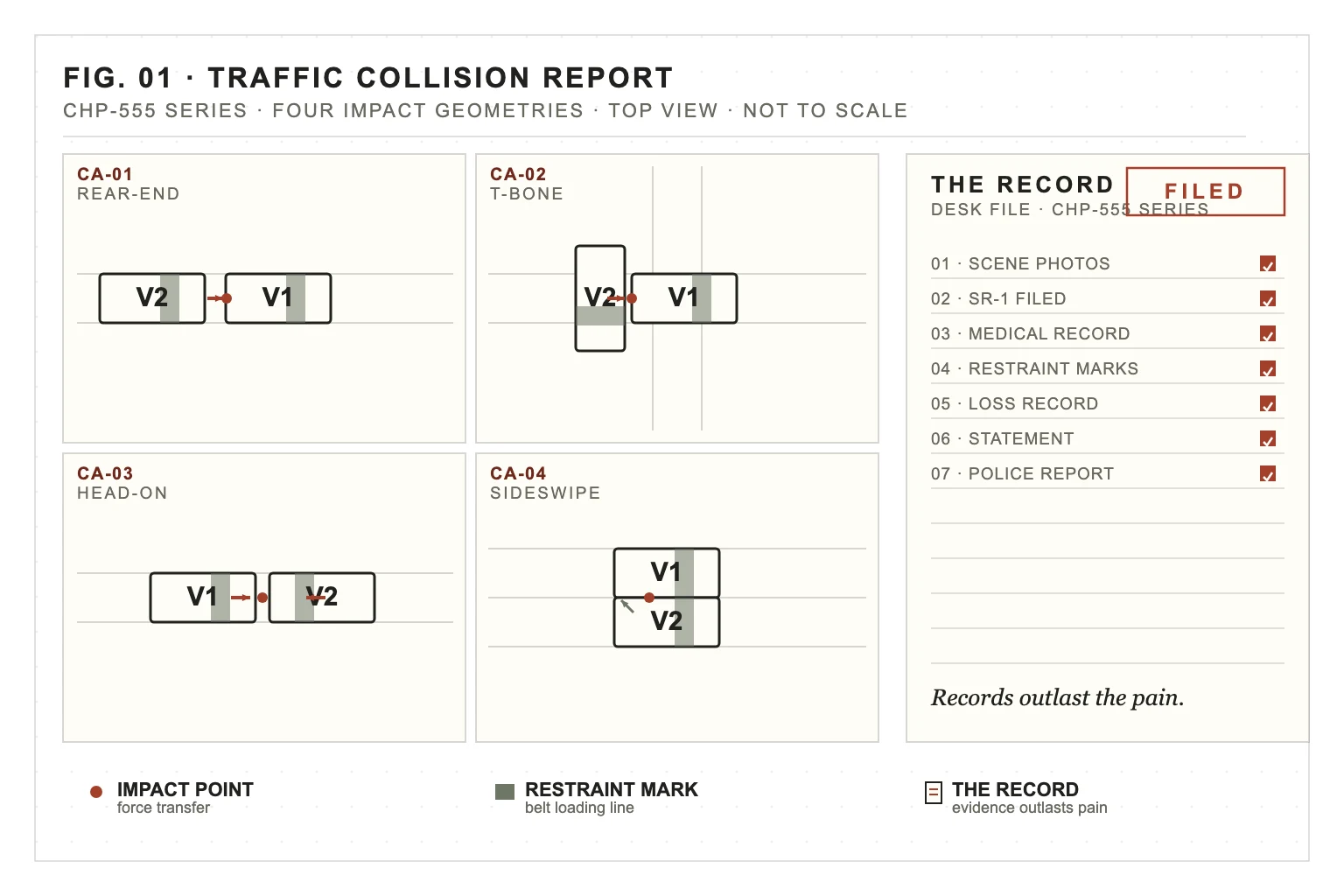
Rear-end, T-bone, head-on, sideswipe: the direction of force decides which structures of the body take the load — and which injuries to expect.
NHTSA's long-standing estimate: seatbelts reduce the risk of fatal injury to front-seat occupants by about 45 percent. Airbags add further protection.
A written SR-1 report to the DMV is due within 10 days when a collision involves injury, death, or damage above the statutory threshold (Vehicle Code §20008).
Personal-injury lawsuits must generally be filed within two years of the injury under Code of Civil Procedure §335.1.
Seat belts reduce the risk of fatal injury to front-seat occupants by about 45 percent.NHTSA — Seat Belts: Get the Facts
Crash injuries live in records: the crash record, the medical record, the loss record, and your own dated notes. The documentation gap is where valid injuries get lost.
Start the crash file →Emergency care, photos, witnesses, report number.
Symptoms, affected areas, findings, restrictions.
Changes, referrals, work impact, daily limits.
Policy, correspondence, SR-1, UM/UIM, deadlines.
California generally uses a two-year period for personal-injury lawsuits (Code of Civil Procedure §335.1), but shorter rules apply elsewhere in the file — the SR-1 report, for example, is due within 10 days (Vehicle Code §20008). Get fact-specific advice early.
Read the reporting rules →Every file distinguishes medical information from California legal and insurance guidance. The desk grounds itself in the statutes (leginfo), DMV and CHP guidance, NHTSA crash research, and professional-association sources (AAOS, CDC) — so readers can move from a plain-language explanation to the underlying authority.