Why side-impact crashes injure
In a T-bone collision the striking vehicle's front end — the strongest, longest-crush part of a car — meets the struck vehicle's side, where the structure between the impact and the occupant is only the door panel and a few inches of crush space. The occupant sits centimeters from the impact plane.
This is the collision type where side airbags and modern side-impact door beams do their most measurable work; NHTSA's side-impact test program exists precisely because this geometry concentrates force on the occupant.
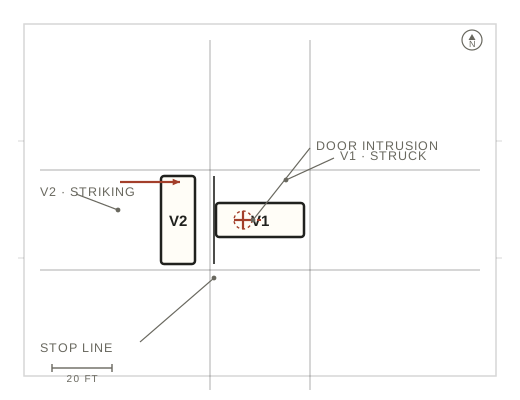
The typical injury pattern
- Head and chest — the struck-side occupant's head can contact the side glass or pillar; the chest loads against the intruding door.
- Pelvis and leg — direct loading of the struck-side hip and leg.
- Contralateral neck strain — the head moves away from the impact then rebounds; the neck loads in side-bending and rotation.
- Concussion — from head contact or from the head's rapid side motion without contact.
Intersection control
Most T-bone collisions happen at intersections, and California's right-of-way rules govern who had the obligation to yield: §21800 (uncontrolled intersections — yield to the vehicle on the right), §21801 (left turns must yield to oncoming traffic), and §21802 (stop signs — stop, then yield). Which rule applies depends on the intersection's controls.