Lateral contact at speed
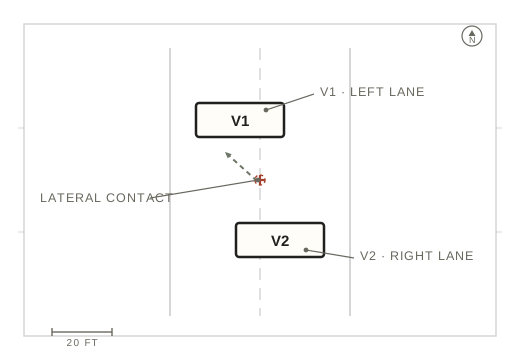
A sideswipe is contact between vehicles traveling in the same direction in adjacent lanes. The initial contact is glancing — mirror to mirror, quarter panel to quarter panel — but the force is lateral, and at highway speed a lateral shove can force a direction change the driver cannot fully correct. The secondary event is often worse than the contact: leaving the lane, striking a barrier, or spinning.
The lane-change variant happens when a vehicle moves laterally into an occupied lane. California requires a turn signal continuously during the last 100 feet before a turn or lane change (Vehicle Code §22108) and forbids moving from a lane until the movement can be made with reasonable safety (§22107).
The typical injury pattern
- Neck strain — the head whips sideways and rebounds; the whiplash mechanism applies in the lateral plane.
- Struck-side arm and shoulder — if the arm is on the door or the shoulder takes the lateral load.
- Head contact — against the side glass or pillar.
- Secondary-event injuries — whatever follows the loss of control.
Fault in lane-change collisions
The duty is on the moving vehicle: §22107 requires safety before moving from a lane. But comparative fault applies — a vehicle speeding in the adjacent lane, or drifting across a line, can share responsibility. California applies pure comparative negligence: recovery is reduced by the claimant's own percentage of fault (Civil Code §1714; Li v. Yellow Cab).