What happens in a rear-end collision
The struck vehicle is accelerated forward by the impact. The occupant's torso accelerates with the seat back, but the head lags for a fraction of a second — then whips through extension and flexion. That sequence is the mechanism behind the neck injury pattern known as whiplash, classified by the Quebec Task Force as WAD grades 0 through IV (see the glossary).
Damage to the vehicles is a poor predictor of injury: the energy that deforms bumpers is absorbed; the energy that accelerates the occupant is what injures. A low-speed collision with little visible damage can still produce a neck injury.
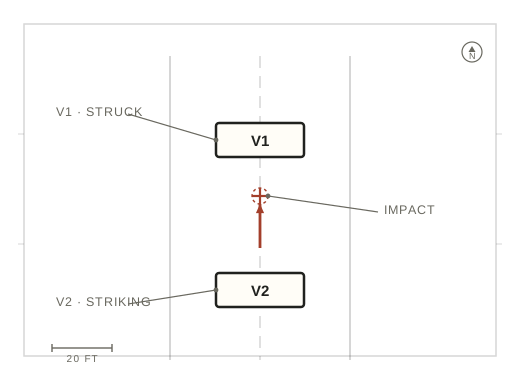
The typical injury pattern
- Neck — cervical strain or sprain (whiplash). The most common rear-end injury.
- Upper back and shoulders — strain where the shoulder belt and torso meet resistance.
- Head — contact with the head restraint, or a concussion where the head whips without striking anything.
- Wrist and hand — bracing against the steering wheel or dashboard.
California's following-too-closely rule (Vehicle Code §21703) exists because the rear vehicle is presumed to control the spacing. Liability in a rear-end collision usually rests with the rear driver — but “usually” is a pattern, not a rule for your case.
Why symptoms can wait
Pain and stiffness after a rear-end collision often peak 24 to 72 hours later: inflammation builds, and the injured tissue's response declares itself over days, not minutes. The late appearance of symptoms is the injury's physiology — and the reason the documentation file insists on a dated record from day one.