When bone takes the load
Most collision injuries are soft-tissue injuries — muscle, tendon, and ligament absorb the load first. A fracture happens when the force exceeds what bone can carry, or when the force is applied directly to a bone with little soft tissue over it: the ribs, the clavicle, the wrist.
The fracture pattern follows the crash type. Frontal crashes fracture wrists (bracing against the wheel), ribs and sternum (belt loading), and lower extremities (dash and toeboard). Side impacts fracture the pelvis and the struck-side leg. Each pattern is a signature the record preserves.
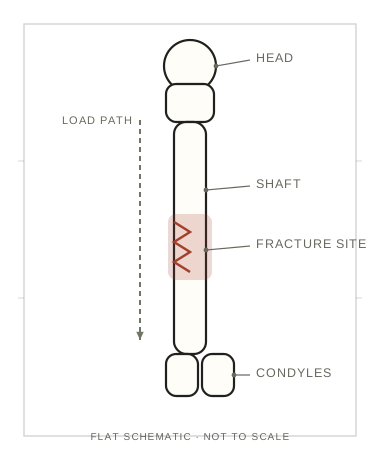
Diagnosis is imaging, not guessing
- X-ray — the first study; shows most long-bone and rib fractures.
- CT — where the fracture is suspected but not seen, or where the joint surface matters.
- MRI — for stress or occult fractures when pain persists with normal X-rays.
Fractures are classified by type — closed or open, displaced or non-displaced — and by the bone involved. The classification matters to treatment, to the healing schedule, and to the record.
The healing schedule
Bone heals on a schedule of weeks to months: immobilization or fixation first, then progressive loading. Simple, well-aligned fractures typically unite in 6 to 12 weeks; weight-bearing and joint fractures take longer, and some require surgical fixation. The schedule is medical, and the record of it — films, notes, follow-ups — is what ties the fracture to the collision in any later claim.
both follow crashes, but they document differently — bone resolves on X-ray, soft tissue often does not. The documentation file explains why the distinction matters to the record.