The record is what ties injury to collision
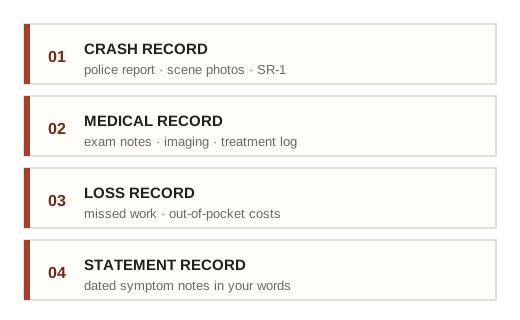
An injury claim is built from records made at the time, not from memories reconstructed later. The file that matters has four parts:
- The crash record — the police report (CHP form 555 on state highways, local agency reports elsewhere), photos of the vehicles and scene, and the SR-1 report to the DMV.
- The medical record — exam notes, imaging, and treatment logs, made week by week. The first evaluation starts the chain; every later entry continues it.
- The loss record — missed work, out-of-pocket costs, and the receipts and stubs that prove them.
- The statement record — your own contemporaneous notes: what hurts, when, and how it limits you. Memory fades; a dated note does not.
At the scene: what to capture
After safety and medical needs, the scene work is evidence work. Photograph the vehicles from all four corners, the damage to each, the intersection or roadway, and anything that marks positions — skid marks, debris, traffic controls. Exchange information: driver's license, registration, insurance. The police report is the anchor document, but the photos are yours and they do not wait for anyone's schedule.
After the scene: the deadlines that structure everything
- 10 days — the SR-1 report to the DMV where injury, death, or property damage above the statutory threshold occurred (Vehicle Code §20008). See the reporting file.
- Days, not weeks — a medical evaluation. Symptoms that declare 24 to 72 hours after a crash are the rule, not the exception, and the first record starts the documentation chain.
- 2 years — the statute of limitations for a personal-injury lawsuit (Code of Civil Procedure §335.1). A claim fully documented on day 700 is a claim; on day 731, unless filed, it is a memory.
Date them, keep the originals, and photograph the damage before repairs — the repaired vehicle cannot testify.
What documentation is not
Documentation is not the claim itself. It does not decide fault or value; it is the evidence those decisions are made from. The claims file explains the structure the documentation feeds.