Three quantities describe a collision
Every collision can be described with three quantities: the speed of each vehicle at impact, the direction of each vehicle's motion, and delta-v — the change in velocity each vehicle undergoes during the crash. Of the three, delta-v is the one that matters most to the body.
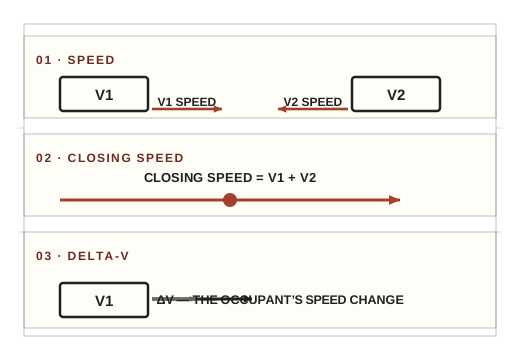
Delta-v is the occupant's speed change
Delta-v is the change in a vehicle's velocity over the crash pulse — the fraction of a second during which the collision happens. The occupants experience the vehicle's change in motion; the greater the delta-v, the greater the loading the body must absorb. Crash-injury research measures injury risk against delta-v. This desk does not invent thresholds; where a source states one, the file cites it.
Geometry decides which structures load
- Frontal — the restraints do the work: the belt loads the chest, the airbag the head and arms. See the head-on file.
- Side — the door and a few inches of crush space are all that stand between the impact and the occupant. See the T-bone file.
- Rear — the torso accelerates with the seat; the neck takes the difference. See the rear-end file.
- Lateral — the body loads sideways, in rotation and side-bending, often before a worse second event. See the sideswipe file.
Vehicle damage is a poor proxy for injury
The energy that deforms bumpers is absorbed by the vehicle; the energy that changes the occupant's velocity is what loads the body. A crash with modest visible damage can still deliver significant delta-v to the occupant — which is why the crash record measures geometry and deformation, and the medical record measures the body.
— measurements, not guesses. Where the record is thin, the honest answer is “unknown,” not a number this desk invents.