The system, in order
In the first milliseconds of a crash, the pretensioner removes belt slack and pulls the occupant into the seat. The belt then spreads the deceleration across the chest and pelvis — the two strongest load paths in the body. The airbag deploys in roughly 30 milliseconds and deflates immediately, distributing the head and chest's forward motion across a larger area.
NHTSA's long-standing estimate: seatbelts reduce the risk of fatal injury to front-seat occupants by about 45 percent. Airbags add further protection, and their combined effect is the single most effective occupant-protection system in a crash.
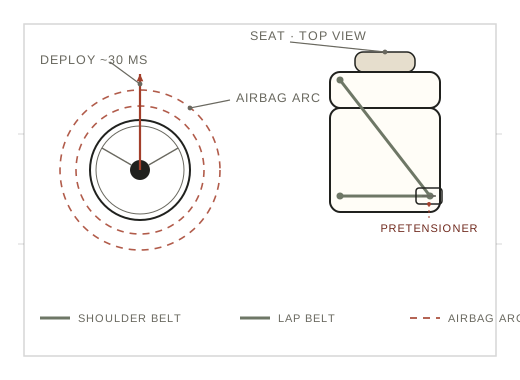
Seatbelt-pattern injuries
- The diagonal bruise — from the shoulder belt across the chest, sometimes called the “seatbelt sign.” It marks the belt's load path and is routinely noted in records.
- Chest wall strain, rib fracture — the belt loads the chest; in high-energy crashes the load can fracture ribs.
- Abdominal bruising — the lap belt loads the pelvis and lower abdomen.
Airbag-pattern injuries
- Abrasions and friction burns — to the face, forearms, and chest where the bag contacts at speed.
- Eye and facial injury — from bag contact; usually minor relative to what the bag prevented.
- Chemical irritation — the deployment gases and powder can irritate airways briefly.
restraint injuries are real, but they are the lesser pattern. The alternative — unrestrained contact with the windshield or dashboard — is the injury pattern restraints exist to prevent. California requires seatbelt use (Vehicle Code §27315) and child restraints (§27360).
When a restraint injury is more than a bruise
Chest wall pain that persists, abdominal pain, or any sign of internal injury after belt loading belongs in a medical evaluation, and the documentation file explains what records should capture. A belt bruise is also evidence: it documents that the occupant was restrained — relevant to the crash record.